

BANYUWANGI, Tugujatim.id – There are many tribes in Indonesia, such as Javanese, Dayak, Sundanese, Ambon, Bugis, etc. These tribes inhabit various islands with their own unique cultures and traditions. One area of Indonesia that is still inhabited by these tribes is East Java. East Java itself has several tribes that still exist today. One of the tribes that still exists today is the Osing tribe, an indigenous tribe in Indonesia from Banyuwangi Regency.
Banyuwangi is one of the regencies in East Java which is located at the eastern end of Java Island. Because it is located at the eastern end of Java Island, Banyuwangi is nicknamed as The Sunrise of Java. Banyuwangi is also known for various types of natural attractions such as Ijen Crater, Baluran National Park, and Alas Purwo National Park. In addition to natural tourism, Banyuwangi also has a variety of cultures, arts, and traditions.


The Osing tribe is the original population of the Banyuwangi people. This tribe comes from the descendants of the Blambangan Kingdom. The Osing tribe is also referred to as Laros or Wong Blambangan or Wong Osing.
The Osing tribe is spread in several districts such as Glagah, Rogojampi, Giri, Kabat, Songgon, Genteng, Cluring, and Singonjuruh. With its widespread distribution, the Osing tribe became the third largest tribe in Java with a population of 286,653 in 2010. To find out more about the Osing tribe, see the following explanation.
The History of Osing Tribe, an Indigenous Tribe in Indonesia from Banyuwangi
In the 16th century, the Blambangan kingdom was subordinate to the Mengwi Kingdom of Bali. At that time there was an important event in the history of Blambangan, namely mixed marriages between Blambangan and Balinese descendants. This tradition continues to occur and is followed by ordinary people. The mixed marriages resulted the Osing tribe in Banyuwangi. The Osing tribe is found in several administrative areas in Banyuwangi, especially in the central and eastern parts.
According to a journal entitled “Suku Osing: Bentuk Perlawanan Budaya Masyarakat Blambangan Terhadap Mataram Islam”, the word Osing means “tidak” which represents the origin of the Osing tribe itself, meaning that the Osing tribe does not come from Java or Bali but calls itself Osing, and the Osing terminology emerges, where the word comes from the word “sing” or “usinghing” which means no, not here referring to not running away when fighting against the VOC.
Osing Tribe Beliefs
The main belief of the Osing tribe is Hindu-Buddhist, but the development of the Islamic kingdom in Pantura made Islam also spread among the Osing tribe. With the many influences of Islam, the Osing tribe no longer uses caste-like tribes in Bali.
Although many adhere to Islam, they are not oriented to Javanese or Arabic Islamic culture but Osing culture itself. The Osing community embraced Islam while still carrying out traditions and culture from the Hindu period.
The Languages of Osing Tribe
The Osing tribe has its own language, the Osing language. As mentioned above that the osing people are a mixture of marriage between the kingdom of Bl ambangan and the kingdom of Bali, so that the Osing language has similar vocabulary with the language of Bali and Old Javanese. Despite having the same language, there are several dialects, namely cara osing and cara besiki.
Tradition and Culture
After knowing about the history, beliefs, and language, now right time to talk about tradition. Every region always has their own tradition, also Osing Tribe. There are some traditions and cultures which still exist in Osing people.
1. Tumpeng Sewu
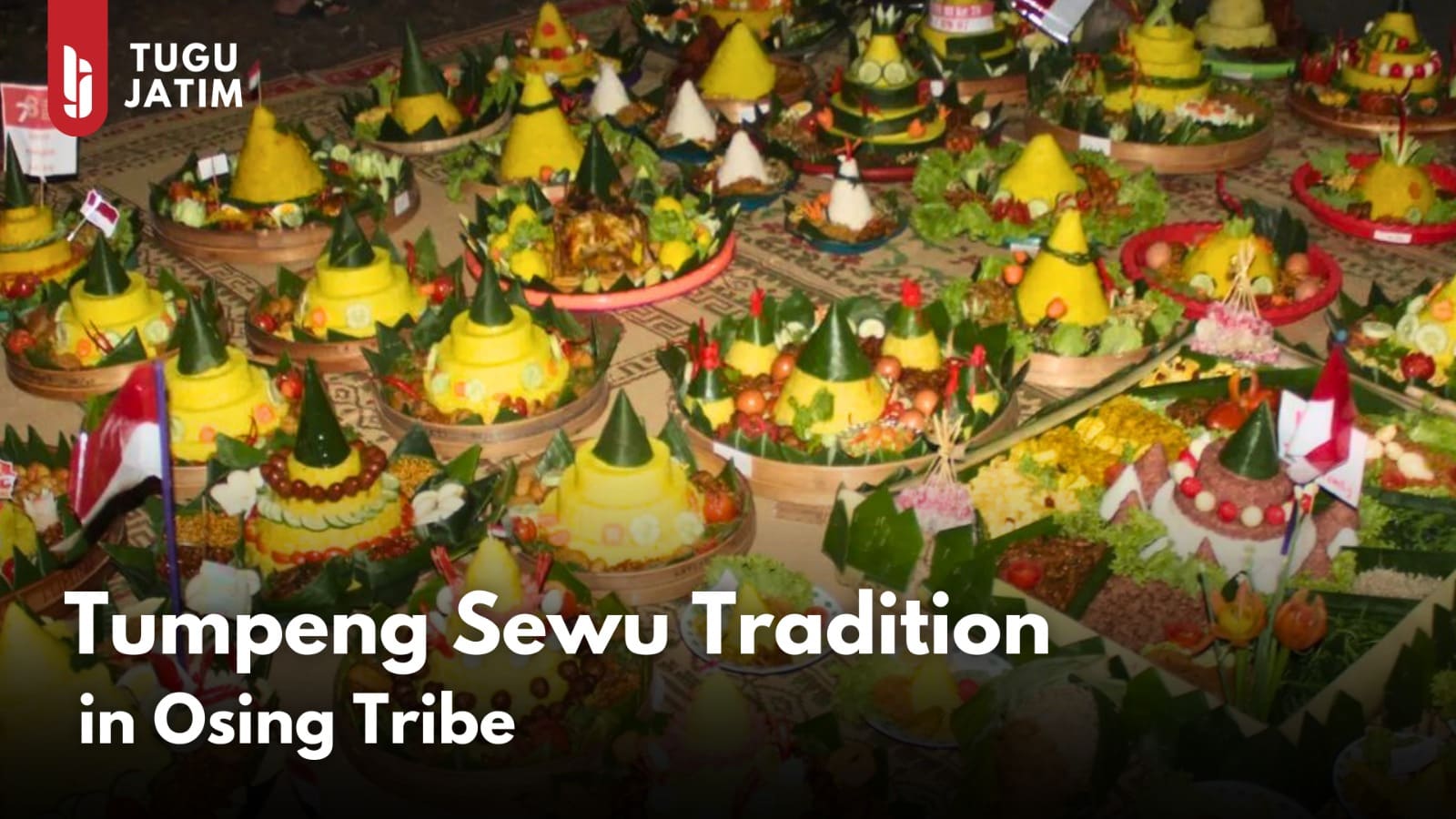
Tumpeng sewu is one of tradition that still exist until now. Tumpeng sewu is conducted every month of Dzulhijjah or commonly known as month of Hajj. Osing people belief that if this tradition is carried out there will be no bad things but if they are don’t do this tradition there will be a disaster.
This tumpeng sewu celebration will serve various types of food and the mandatory food that must be present is “Pecel Phitik” which is grilled chicken that is given coconut shavings and special spices of the Osing Tribe.
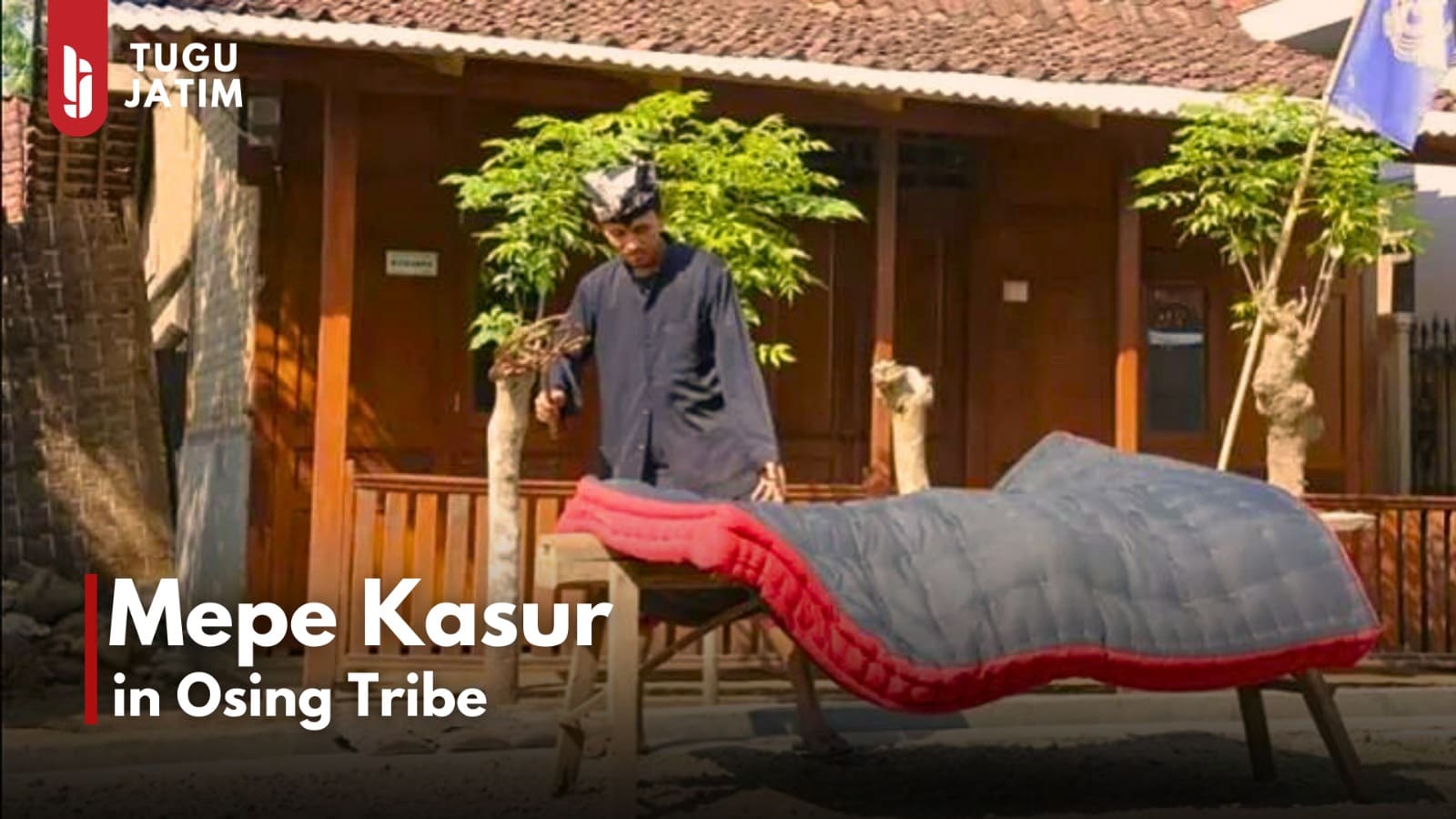
2. “Mepe Kasur” Tradition
(Foto: Wikipedia commons, Riedoak)
The tradition of “Mepe Kasur” or in Indonesian “menjemur kasur/tempat tidur” is a unique tradition. Usually, most people dry the mattress or bed when the mattress is wet, unlike the osing people, they will routine to dry the mattress during the month of Dhul-Hijah or at the same time as the village rescue. This is done as a form of maintaining harmony and working in a household. On the D-day of the celebration, all residents will dry the mattress simultaneously and gather in front of the house.
3. Nginang
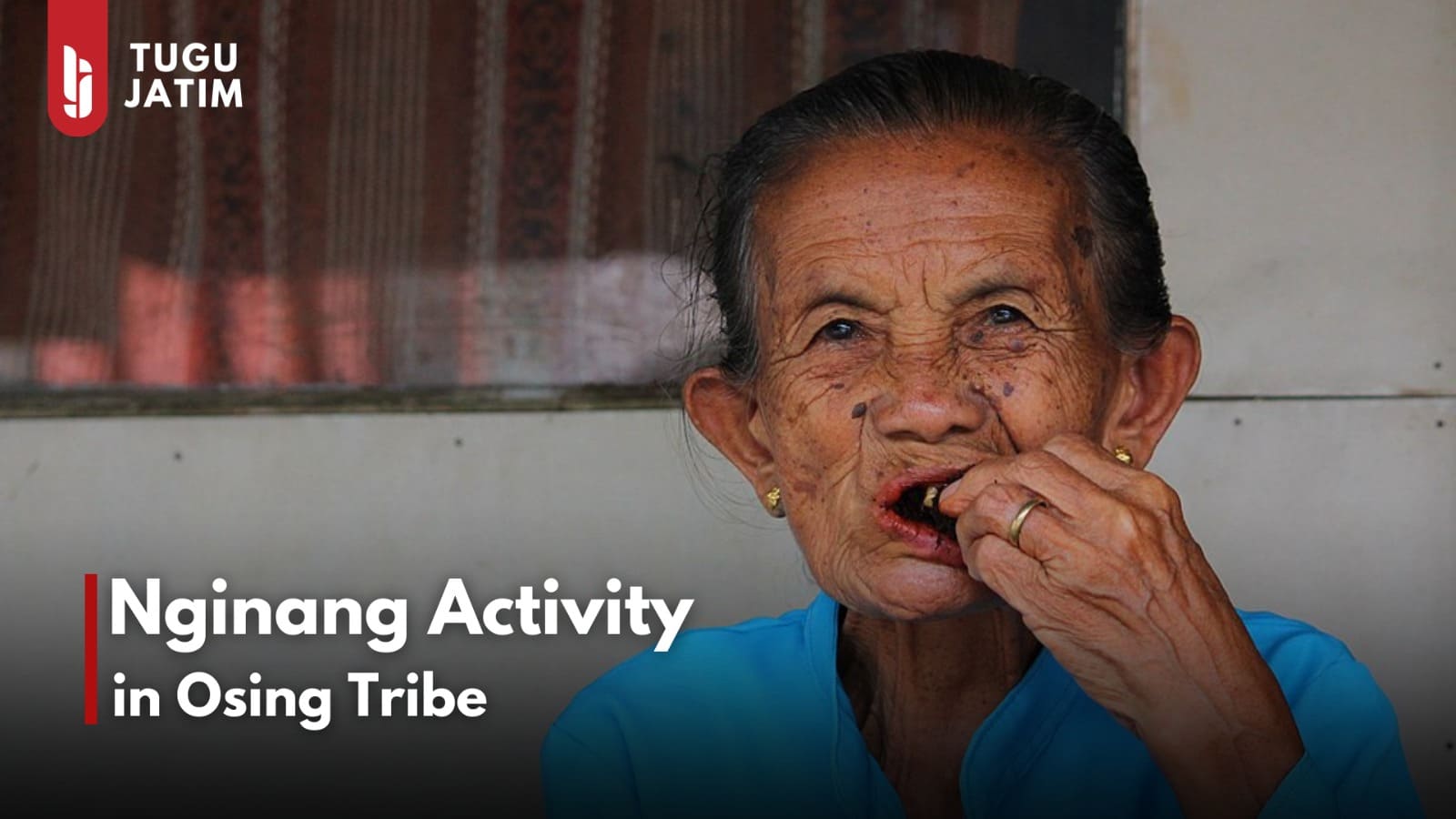
Nginang is an activity of chewing kinang which consists of areca nut, betel nut, gambier, tobacco, lime, and cloves. If you visit the countryside in Banyuwangi, you will easily find mothers who are brushing their teeth with a brownish-red herb, this is what is called nginang. Initially nginang was done to get rid of bad mouth odor, but over time nginang became a habit and caused a sense of pleasure that was difficult to eliminate.
This is the information about the Osing tribe, An Indigenous Tribe In Indonesia from Banyuwangi. Having an extraordinary history and culture makes the Osing Tribe a unique tribe whose culture must be preserved.
Writer: Ludea Cindy (Magang)
Editor: Imam A. Hanifah-Dwi Lindawati
Editor Bahasa: Nugrahaningtyas FA MPd